
The rules in the Islamic legal tradition (Sharia) are divine rules inferred in the Quran and Sunnah which rules all life aspects of the Muslims such as worship, ethics, family and trade. Fiqh is the scholarly interpretation of these sources of divine law by humans by accepted methods such as consensus (ijma) and analogical reasoning (qiyas). Understanding what are Islamic laws requires grasping both of these dimensions.
What are Islamic laws if not some kind of a single legal code published in a bound book? They represent a breathing, living tradition that has been fourteen centuries long, a tradition of scholarship, debate and application in dozens of nations. Regardless of whether you are a Muslim who needs to gain a clear understanding of your religious duties, you are an academic who studies comparative jurisprudence, or you are a non-Muslim who is simply intrigued by the way more than 1.9 billion people manage to find answers to questions related to morals, law, and life in general, to understand what are Islamic laws, it is important to know this one and the most important truth; that there are layers.
A majority of the sources distil the question of what are Islamic laws into one term, Sharia, and leave it at that. Such a strategy does not work with everyone. It betrays Muslims who are aware that their tradition is much more subtle, and it betrays non-Muslims who end up with a partial image. This guide goes deeper. It appeals to primary sources of Quran and Prophet, classical juristical authorities and the unique approaches of the chief schools of jurisprudence to outline what are Islamic laws the way they truly are: a sophisticated, multi-layered legal and ethical tradition.
The question of what are Islamic laws has various academic interpretations. This guide gives mainstream positions of established schools of thought. To have a personal religious determination, use the services of a qualified scholar or local Islamic authority.
What Is Islamic Law? Understanding Sharia and Fiqh
When studying what are Islamic laws, the distinction between Sharia and Fiqh is the single most important — and the one that competitors all but never mention — in terms of Islamic jurisprudence. Their confusion, misrepresentation and bad analysis are caused by their conflation.
Sharia — The Divine Path
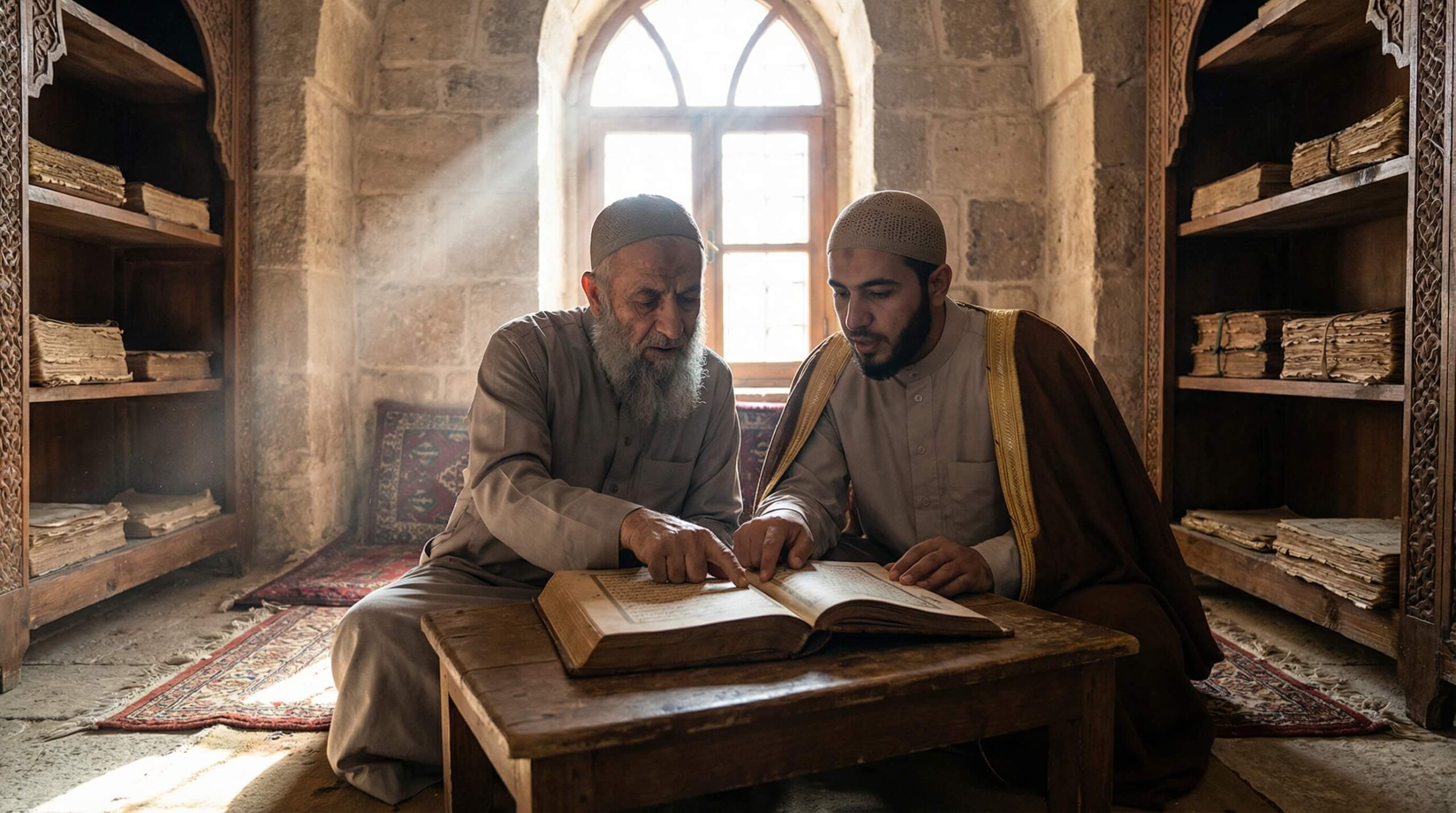
The Arabic term Sharia (شريعة) literally translates as the path of a watering place — a very strong metaphor in the Arabian context of the path of life. Sharia is the collective name of the guidance that God has given in the Quran and is applied through the Prophet Muhammad ﷺ in the Islamic theology. This foundational understanding defines the scope of what are Islamic laws in their entirety.
According to Allah: “Then We put you, [O Muhammad], on an ordained way (shariah) concerning the matter of religion; so follow it and do not follow the desires of those who do not know.” (Quran 45:18)
This divine meaning of Sharia is believed to be perfect, unchanging and exhaustive. It encompasses not only legal decisions but also moral teachings, religious ways and ethical behaviors. The way of life God wants humanity to have.
Fiqh — The Human Science of Divine Law
Fiqh (فقه): realistic interpretation. It means the collection of decisions made by human scholars based on their study and interpretation of the Quran and the Sunnah. The resulting rulings form the body of applied legal guidance across different communities. In contrast to Sharia, fiqh is a creation of the intellect of mankind — and thus it may be mistaken, or develop, as well as differ in the opinions of the scholars. The fuqaha (jurists) are the specialists who derive practical rulings.
In his masterpiece work Al-Mustasfa (d. 1111 CE), Imam Al-Ghazali defined fiqh as knowledge of the practical legal rulings based on their evidences that have detailed descriptions. The definition supports the point that fiqh is not a divine decree, but an intellectual exercise.
This is the reason why several schools of thought can co-exist — this is because they are all genuine scholarly efforts to comprehend one and the same divine revelation. [Internal Connection: What Is Fiqh in Islam?]
The Importance of this Distinction
The educated question one would pose when anybody asks what are Islamic laws and whether they prohibit X is: which school? Based on which evidence? Is it the Sharia itself or fiqh interpretation? In the absence of such three layers of awareness — Sharia (divine), Fiqh (scholarly), and State Law (governmental) — all discussions about what are Islamic laws commence on a false premise.
The Four Primary Sources of Islamic Law
Understanding the sources behind what are Islamic laws is essential for grasping how rulings are derived. The Islamic jurisprudence (أصول الفقه — usul al-fiqh) is based on priority of sources. They are not arbitrary choices and their validity lies in the Quranic teachings and in Prophetic teachings. This legal framework is built on four primary sources.
Allah says: “O you who have believed, obey Allah and obey the Messenger and those in authority among you. And if you disagree over anything, refer it to Allah and the Messenger.” (Quran 4:59)
This verse alone lays down the priority scheme which has been observed by scholars during more than fourteen centuries.

The Quran — Primary Divine Revelation
The Quran is the literal and uncorrupt word of Allah which was revealed to Prophet Muhammad ﷺ in 23 years. It has 6,236 verses (around 500 legal verses or ayat al-ahkam) dealing with any matter, including inheritance (Quran 4:11-12), commercial dealings (Quran 2:275) as well as criminal justice.
But most of the Quran is not a catalogue of codes, but a catalogue of general principles — justice, mercy, equity, etc. This is by design. And Allah, as He says: “This day I have perfected for you your religion and completed My favor upon you.” (Quran 5:3). The perfection consists both in express laws as well as in principles out of which scholars can derive guidance in each age. This is why rulings derived from the Quran address both specific situations and universal principles, answering the question of what are Islamic laws at their deepest level.
The Sunnah — Prophetic Tradition
The Sunnah is the statement, deed, and implicit approval of Prophet Muhammad ﷺ, which has been maintained in the literature of hadiths. The Sunnah interprets and elaborates the Quranic principles and operationalizes them. Without the Sunnah, many aspects of what are Islamic laws would lack practical detail.
The Prophet said: “I have left amongst you two things, you will not go astray as long as you stick to them, the Book of Allah and my Sunnah.” (Muwatta Imam Malik; also narrated in al-Mustadrak of al-Hakim)
There are tens of thousands of narrations in the major hadith collections, which include Sahih al-Bukhari, Sahih Muslim, Sunan Abu Dawud, Sunan al-Tirmidhi, Sunan al-Nasa’i and Sunan Ibn Majah. These were authenticated by scholars with the science of hadith criticism (ilm al-rijal) as sahih (authentic), hasan (good), or da’if (weak). [Internal Link: What Is Hadith?]
Ijma — Scholarly Consensus
Ijma (إجماع) is the agreement of qualified scholars of a given time on a ruling, and it becomes a source of law. The Prophet ﷺ said: “My ummah will not agree upon error.” (Sunan Ibn Majah 3950)
In the past, individuals accepted to compile the Quran in one volume and it was also decided that the five daily prayers must be performed. This consensus is referred to as ijma and it prevents the alteration of basic rules permanently. Ijma ensures stability in what are Islamic laws by preventing reversal of established rulings.
Qiyas — Analogical Reasoning
Qiyas (قياس) refers to analogical reasoning. The scholars apply analogy in case a new problem is not discussed in the Quran, Sunnah, or ijma. They have a decision which they know, and take the reason out of the decision, and use the reason to the new problem.
An archetypal one: the Quran does not allow grape wine. The reason was intoxication, and not the grape, as understood by the scholars. Thus, intoxicants, no matter the source, are prohibited. Through qiyas, what are Islamic laws can address modern issues such as synthetic drugs without additional revelation.
The Five Major Schools of Islamic Jurisprudence (Madhabs)
Different scholarly traditions constituted five major schools known as madhabs. They are no sects; they simply present alternative modes of drawing law out of the same sources. Understanding what are Islamic laws requires familiarity with each of these schools.
Hanafi School
Founder: Imam Abu Hanifa al-Nu’man (699–767 CE) of Kufa, Iraq.
Style: Employs a lot of reasoning, analogies and preference (استحسان — istihsan). He sought the explanation behind every rule and the school is known for its flexibility. The Hanafi approach has made the legal tradition accessible across diverse cultures.
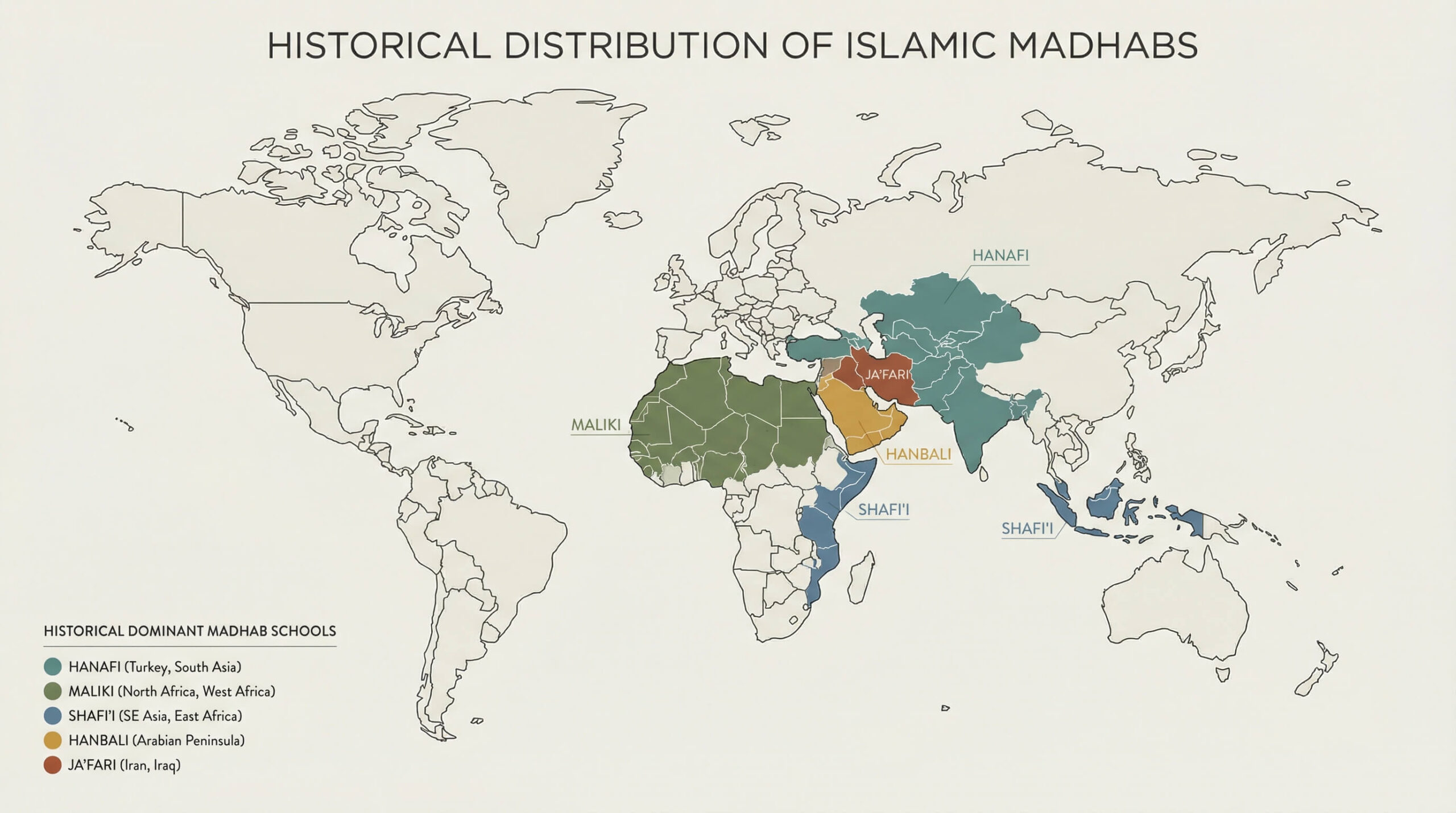
Where it is popular: It is the most popular school across the globe. It prevails in Turkey, Pakistan, India, Bangladesh, Central Asia, Afghanistan and the Arab world. It was propagated by the Ottoman Empire.
Maliki School
Founder: Imam Malik ibn Anas (711–795 CE), of Medina.
Procedure: Places the greatest emphasis on what is actually done by the people in Medina since their ways preserve the teachings of the Prophet. Uses istislah (استصلاح) — public interest. One of the earliest legal books is his book Al-Muwatta.
Where it is widespread: It is widespread in North Africa (Morocco, Algeria, Tunisia, Libya), West Africa (Nigeria, Senegal, Mali), and some of the Arabian Peninsula.
Shafi’i School
Founder: Imam Muhammad ibn Idris al-Shafi’i (767–820 CE) who was a disciple of Imam Malik.
Procedure: In his book Al-Risala — foundational to usul al-fiqh — he prepared the major principles of law. He combined rigorous text with argument, providing explicit principles on when narrations on the Prophet are superior to other testimony. His systematic methodology continues to influence how what are Islamic laws are derived today.
Where it is found: It is widespread in Southeast Asia (Indonesia, Malaysia, Philippines), East Africa (Kenya, Tanzania, Somalia) and Yemen as well as in some regions of Egypt.
Hanbali School
Founder: Imam Ahmad ibn Hanbal (780–855 CE) of Baghdad.
Procedure: Lays the greatest emphasis on the Quran and Hadith, which means little dependence on reasoning. Even a weak hadith is preferable in this school to analogical reasoning.
Its prevalence: It is predominant in Saudi Arabia and Gulf states. The Saudi law is based on the ideas of Hanbali significantly.
Ja’fari School (Shia)
Founder: Imam Ja’far al-Sadiq (702–765 CE), the sixth Shia Imam.
Differences: It employs the narration of the Prophet’s family and makes the Imam have authority. It also relies on reason (aql) as a formal source of law, and this distinguishes the Ja’fari school from Sunni schools on certain issues of worship, inheritance and marriage.
Where it is widespread: Iran, Iraq, Lebanon, Bahrain and Shia people all over the world.
Comparison Table: Methodological Differences of Significance
| Feature | Hanafi | Maliki | Shafi’i | Hanbali | Ja’fari |
| Primary evidence | Quran + Sunnah | Quran + Sunnah + Medina Practice | Quran + Sunnah | Quran + Sunnah (strict) | Quran + Sunnah + Ahl al-Bayt traditions |
| Role of reason | Extensive (istihsan) | Moderate (istislah) | Systematic (qiyas) | Minimal | Formal (aql) |
| Flexibility | High | Moderate | Moderate | Lower | Moderate |
| Central area | South/Central Asia | North/West Africa | Southeast Asia/East Africa | Arabian Peninsula | Iran, Iraq |
The Five Objectives of Islamic Law (Maqasid al-Shariah)
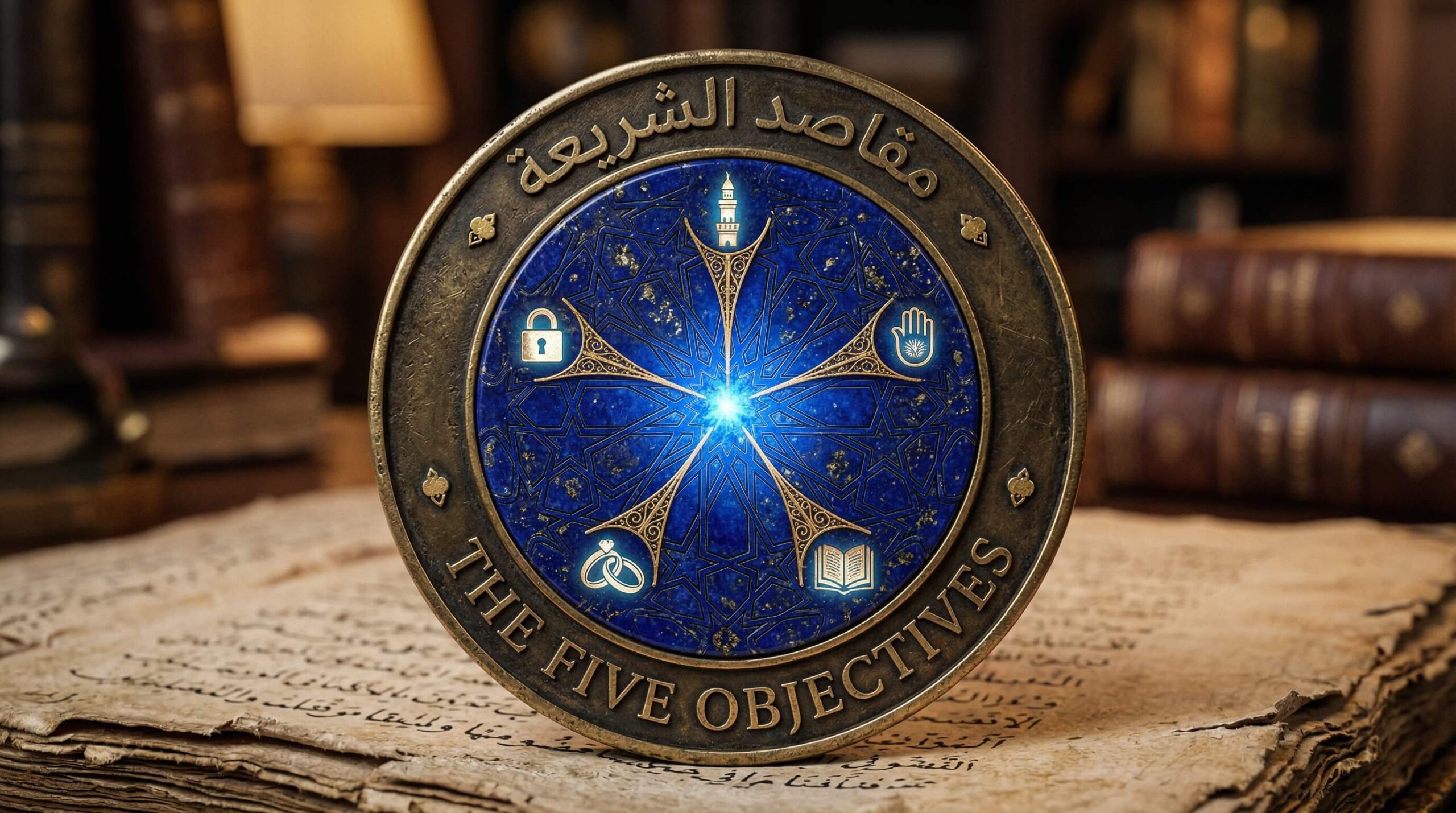
While specific rulings demonstrate what to do, the Maqasid al-Shariah (مقاصد الشريعة) clarify the higher purpose behind what are Islamic laws. This framework was systematized by Al-Ghazali in Al-Mustasfa and further developed by Abu Ishaq al-Shatibi (d. 1388 CE) in his landmark work Al-Muwafaqat.
Protection of Religion (Deen)
The legal tradition guarantees the right to pray, fast and also to give charity. According to it, there is no pressuring to believe. (Quran 2:256)
Protection of Life (Nafs)
What are Islamic laws if not a system that places the sanctity of life among the highest priorities? All human lives are precious. Killing one person is killing everybody; saving life is saving all humanity. (Quran 5:32)
Protection of Intellect (Aql)
The prohibition of intoxicants, as addressed in the Quran (2:219, 5:90-91), maintains the mind in a clear state and promotes learning, science and reason.
Protection of Lineage (Nasl)
The family regulations concerning marriage, divorce, custody and inheritance ensure that the family structure is solid.
Protection of Wealth (Maal)
The prohibition of riba (interest), fraud prevention, and fair trade regulations protect people’s property and maintain healthy communities. These rulings on financial ethics form the basis of the entire Islamic finance industry, demonstrating what are Islamic laws in the economic sphere.
Read More: How to calculate zakat on gold and silver in Pakistan 2026
Categories of Rulings in Islamic Law
The classification of all actions into five groups under what are Islamic laws is more elaborate than simply halal and haram.
The Prophet said: “The lawful is evident and the unlawful is evident and there are doubtful matters between them….” (Sahih al-Bukhari 52; Sahih Muslim 1599)
| Category | Arabic Term | Definition | Example | Consequence |
| Obligatory | Wajib / Fard (واجب / فرض) | Must be performed; sinful to omit | Five daily prayers | Rewarded for performing; sinful for omitting |
| Recommended | Mandub / Mustahabb | Good to do; no sin if not done | Voluntary fasting | Rewarded for doing; no sin for leaving |
| Neutral | Mubah | Permissible; no reward or sin | Picking food to eat | No spiritual consequence |
| Disliked | Makruh | Not sinful, but better avoided | Excessively wasteful acts | Rewarded for avoiding; not sinful to do |
| Forbidden | Haram (حرام) | Prohibited; sinful | Theft, adultery | Sinful to do; rewarded for avoiding |
This demonstrates that what are Islamic laws are primarily a moral guide rather than a punitive system. The majority of rules can be classified into the first four categories which include everyday worship, moral decisions, and day-to-day life.
[Internal Connection: Halal and Haram Explained]
Key Areas Covered by Islamic Law
Worship and Rituals (Ibadat)
Among the areas covered by what are Islamic laws, worship rituals represent the most agreed-upon category. These are individual issues between an individual and God: the five prayers (salah) a day, fasting at the time of Ramadan (sawm), charity annually (zakat), and pilgrimage to Mecca (hajj). They are made up of definite must-do rules (fard) about which there is scant scholarly disagreement, but which may have individual school variations.
Personal and Family Matters
Among all areas of what are Islamic laws, family law is the most widely implemented in modern legal systems. The family law tradition is highly concerned with marriage contracts, divorce, child custody, and distribution of property on the death of one person. Clear rules and conditions of inheritance are provided in the Quran (see Quran 4:11-12), and the Sunnah provides explanations of marriage and ways of divorce. The family law component is implemented in most contemporary legal systems even in instances where there are other legislations.
Commerce and Financial Operations (Muamalat)
The business law dimension of what are Islamic laws is a law that deals with contracts, partnerships, trade and banking. Riba (ربا) — interest — is not permitted: “Allah permits trade and forbids riba.” (Quran 2:275) This is a rule that forms the basis of the entire Islamic finance business that governs trillions of dollars across the globe through instruments such as murabaha, musharakah, and sukuk.
Criminal Law (Jinayat)
The following section describes classical legal theory. Application varies significantly by country, era, and scholarly interpretation. It should not be taken as a description of any current legal system.
The criminal law component of what are Islamic laws includes three crime categories:
Hudud (حدود): The fixed punishments imposed by Quran or Sunnah against stealing or committing adultery. These require extremely compelling evidence such as four witnesses to adultery, and therefore people are not supposed to be convicted easily.
Qisas (قصاص): Justice of retaliation for physical injury or the killing of a person; however, the Quran also promotes forgiveness and the payment of damages (diyah — دية).
Ta’zir (تعزير): The qadi (judge) determines punishment to be applied to non-hudud or non-qisas crimes. The vast majority of criminal cases fit into this category and leave judges with a lot of options.
The Prophet ﷺ said: “So, seek to avoid the hudud punishments as much as possible. Provided there is an option of releasing the accused, release him since it is preferable to forgive than to punish a wrongdoer.” (Sunan al-Tirmidhi, variant narration)
How Islamic Law Is Applied: Country-by-Country Analysis
What are Islamic laws in practice? They are not applied the same way in every country. Its degree of application ranges between total classical systems and individual practice in secular states.
Classical Countries of Implementation
Most issues have been governed in Saudi Arabia by Hanbali law. It first codified a personal-status law in 2021, shifting the responsibility of making decisions to statutes made by judges. These reforms represent major changes in how what are Islamic laws are codified in the Kingdom.
Iran is a Ja’fari (Twelver Shia) and theocratic republic. The Guardian Council presides over all laws to check on their compliance with Sharia. Iran is a mixture of Shia concepts of law coupled with republican government with an elected parliament.
Mixed Countries of Legal System
Most Muslim nations are a composite system whereby personal status is governed by the legal tradition and business, crime, and government governed by a different set of codes. In these mixed systems, what are Islamic laws govern specific areas while civil codes handle others.
Country-by-Country: Islamic Law vs. Secular/Civil Law Application
| Country | Islamic Law Application | Secular/Civil Law Application |
| Pakistan | Personal status, certain criminal (blasphemy, hudud) | Commercial, constitutional |
| Malaysia | Muslim personal, Islamic banking regulation | Criminal, commercial, constitutional |
| Egypt | Personal status (Al-Azhar influence), family law | Criminal (civil code), commercial |
| Indonesia | Personal status (religious courts) | Constitutional, criminal, commercial |
| Morocco | Family law (Mudawwana, reformed 2004) | Criminal, commercial |
The Council of Islamic Ideology in Pakistan and the dual courts in Malaysia have Sharia checks on the legislation, though the courts are only operating as Sharia courts in matters of personal jurisdiction.
Secular Muslim-Majority Countries
In the 1920s, with the reforms of Atatürk, Turkey became party to the Swiss civil law and the Italian criminal law, moving the Sharia law out of the state law. In the year 1956, Tunisia also modernized the personal law. The Soviet influence remained in Azerbaijan making it secular. In such states, what are Islamic laws remain a matter of personal religious practice rather than government enforcement.
Muslim-Minority Countries
The United Kingdom: Non-binding advice under the Arbitration Act is provided through Sharia councils. The Islamic arbitration in the United States is governed by the general law and does not have special status. India continues to have distinct personal laws — the Muslim Personal Law (Shariat) Application Act of 1937 — and this allows the Muslims to apply Islamic family law in addition to the national code.
[Internal Link: Sharia Law by Country]
Islamic Law vs Western Legal Systems: Key Differences
| Dimension | Islamic Legal Tradition | Western Legal Tradition |
| Origin of authority | Divine revelation (Quran, Sunnah) | Human laws, constitutional rules |
| Absolute sovereignty | God (Allah) | The people / the state |
| Relationship between law and morality | Law and morality are identical | Law and morality are distinct |
| Scope | All human activity, including worship, business, and personal conduct | Mostly public, civil or criminal activities |
| Flexibility mechanism | Ijtihad — scholars reason independently | Laws are modified by legislation or judicial decision |
| Legal categories | 5 degrees, including obligatory, forbidden, and neutral | Two main categories: legal and illegal |
| Goal | Well-being in this life and the afterlife | Order in society and rights for every individual |
This comparison reveals structural differences, rather than one superior system. Even the two traditions vary internally: common law is different from civil law, and Hanafi is different from Hanbali. What are Islamic laws function within a framework where law, morality, and spirituality are intertwined.
Common Misconceptions About Islamic Law
“Sharia Is Monolithic”
This is the most widespread erroneous opinion. The four Sunni schools of thought and the Ja’fari school have numerous varying specific rulings. A Hanafi professor in Turkey may make a different choice than a Hanbali in Saudi Arabia, and both are considered right. According to the Prophet ﷺ: “Make things easy and do not make them difficult.” (Sahih al-Bukhari 69). Multiculturalism in the academic world is viewed as a blessing upon the community. Anyone asking what are Islamic laws must appreciate this diversity.
“Islamic Law Cannot Evolve”
The ijtihad (اجتهاد) — independent intellectual thinking — is there to address new circumstances. While taqlid (following established rulings) is the norm for laypersons, ijtihad enables qualified scholars, known as mujtahids, to address new issues. There were scholars such as Ibn Taymiyyah (d. 1328 CE) who advocated ijtihad rather than blind imitation where the texts required its application. Organ transplantation, digital trades, and bioethics are some subjects on which new rulings are issued today by institutions like the Islamic Fiqh Academy (OIC). The history of ijtihad proves that what are Islamic laws have always had mechanisms for addressing new realities.
“Sharia Only Covers Punishments”
Sharia criminal law — hudud, qisas, ta’zir — is only a minor portion of Sharia. The majority of Islamic texts are concerned with prayer, fasting, charity, marriage, business transactions, food, personal hygiene, relations with neighbors, and the way to behave in an ethical manner. The breadth of what are Islamic laws covers prayer, charity, marriage, commerce, and ethics far more than it covers penalties. To say that Sharia is nothing but punishments is as much as saying a complete constitution is nothing but its criminal code.
Scholarly Authorities and Fatwa Bodies
The question of what are Islamic laws is not answered in isolation. Authority in the Muslim world is provided by known institutions. The ulema (body of Islamic scholars) serve as the collective guardians of legal interpretation.
Al-Azhar University (Cairo, founded 970 CE) is the most esteemed Sunni school in the world. Its Grand Imam has been regarded as the most prominent Sunni scholar. The fatwa (فتوى) committee of the university makes rulings which are widely respected.
The Islamic Fiqh Academy is an institution established by the Organisation of Islamic Cooperation (OIC), which gathers scholars of all schools to discuss contemporary issues through joint ijtihad. It is nearest to having an international Islamic consensus, and its decisions in Islamic finance, medical ethics, and social issues carry significant scholarly weight.
National bodies — which intertwine scholarship and state law — are the Dar al-Ifta al-Misriyyah (the official fatwa agency in Egypt) and the Council of Islamic Ideology in Pakistan. In South Asia, institutions like Darul Uloom Deoband have shaped Hanafi legal scholarship.
The foundation of learning is still based on key classical texts. Classical texts of usul al-fiqh remain central to legal training. Imam Malik’s Al-Muwatta remains among the earliest legal compilations and is still being studied by scholars of the traditional sciences, alongside Imam al-Shafi’i’s Al-Umm and Al-Risala, and the Hanafi text Al-Hidayah by Al-Marghinani. Al-Ghazali’s contributions to usul al-fiqh remain foundational.
Must Watch: Sharia Law in 8 Minutes | Snapshots with Imam Tom Facchine
Frequently Asked Questions About Islamic Law
What is the distinction between Sharia and Fiqh?
Sharia is the divine guide of Allah contained in the Quran and Sunnah — it is regarded to be flawless and unchangeable. The human endeavor by scholars in the understanding and application of Sharia is called fiqh. The outcomes of the various fiqh may co-exist since the two are different methods of interpreting the same sources of divinity.
What are the four major sources when asking what are Islamic laws?
The Quran (main revelation), the Sunnah (Prophetical tradition), Ijma (scholarly consensus), and Qiyas (analogical reasoning). Others also include istihsan (juristic preference), istislah (public interest) and urf (عرف — custom).
Which countries observe Sharia law?
What are Islamic laws in different countries varies greatly. They are not applied in the same way in any country. It is used the most by Saudi Arabia and Iran. Family and personal status are the main domains of Sharia law in Pakistan, Malaysia, Egypt, and Indonesia. In Turkey and Tunisia, legal systems are completely secular.
What are the five aims of the Islamic law?
The Maqasid al-Shariah, systematized by Al-Ghazali, are the protection of life (nafs — نفس), religion (deen — دين), mind (aql — عقل), lineage (nasl — نسل), and property (maal — مال). Each of the rules strives to aid one or several of these objectives.
Should Sharia law be applied to non-Muslims?
According to most classical scholars, it is only the Muslims who are under Sharia personal law. Historically, non-Muslim states under Muslim-majority countries had their own religious courts where they obtained their family issues. All residents were normally covered by criminal and commercial law.
What are the four madhabs in Sunni Islam?
Hanafi (by Imam Abu Hanifa), Maliki (by Imam Malik), Shafi’i (by Imam al-Shafi’i) and Hanbali (by Imam Ahmad ibn Hanbal). Both adopt varying approaches to discover Quran and Sunnah law. The principal school of Shia is the Ja’fari one.
Is it possible to change or evolve what are Islamic laws over time?
The essential divine Sharia (Quran and Sunnah) is perceived to be inexhaustible. But fiqh, as human understanding, is one which develops through ijtihad. The new digital trade, medical technologies, and environmental issues are topics addressed by modern scholars and organizations such as the Islamic Fiqh Academy.
What is a fatwa in Islamic law?
Fatwa is a jurisprudential decision of a qualified scholar (mufti — مفتي) in relation to a particular question. It is not the law; it is the guidance of scholars. There could be many muftis who are capable of giving various fatwas on one issue and individuals could select the opinion that gives them the best evidence.
How do humans observe what are Islamic laws in daily life?
It depends on where you live. The rules are used in the government in countries that have Sharia courts, like Saudi Arabia, Iran, and Malaysia. In places without Sharia courts, the completion of the law is based on their own faith and the urging of their community. The majority of Muslims in the world interpret what are Islamic laws themselves by relying on their faith.
Is Sharia only to be understood in a single way?
No. The original Sharia is the one originating in the Quran and the Sunnah and is the same everywhere. However, when it is studied by people, they have come up with a number of valid legal schools. This assortment is not viewed by scholars as an error: it is a blessing which enables the law to suit new times and circumstances.
Conclusion
What are Islamic laws? They are not a single set of rules, the law of a single country, or opinion of a single scholar. They represent a venerable tradition, which originated in the sacred literature (Sharia), which scholars studied over several centuries (fiqh), and which is applied in various forms by the governments of the world (state law). There is one idea common to all recognized systems — the Maqasid al-Shariah, or the five aims that each rule attempts to safeguard: religion (deen), life (nafs), reason (aql), family (nasl) and property (maal). These are both the purposes that provide clear moral guidance, as well as allowing the scholars to adapt the law to new circumstances through ijtihad.
There are five major schools — Hanafi, Maliki, Shafi’i, Hanbali and Ja’fari — indicating that interpretation is important, and that people strive to achieve it knowing that they can interpret the divine words only so far in detail. To learn more about what are Islamic laws in depth, either personally, as a scholar, or to know more about other cultures, the most prudent thing to do is to seek out qualified and respected scholars. These are the communities which have preserved the custom for more than a millennium; and they remain open and quite helpful.